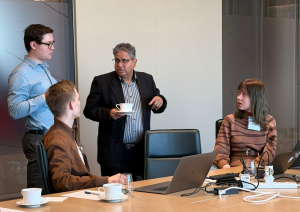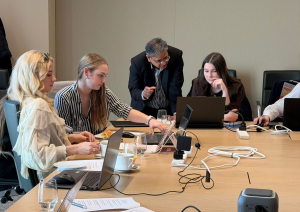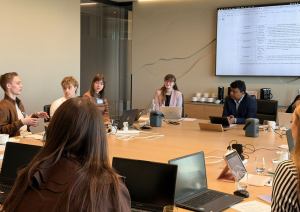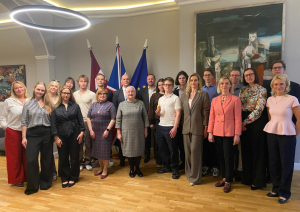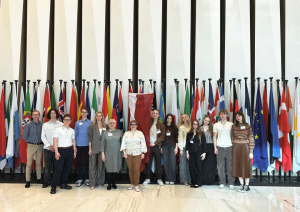


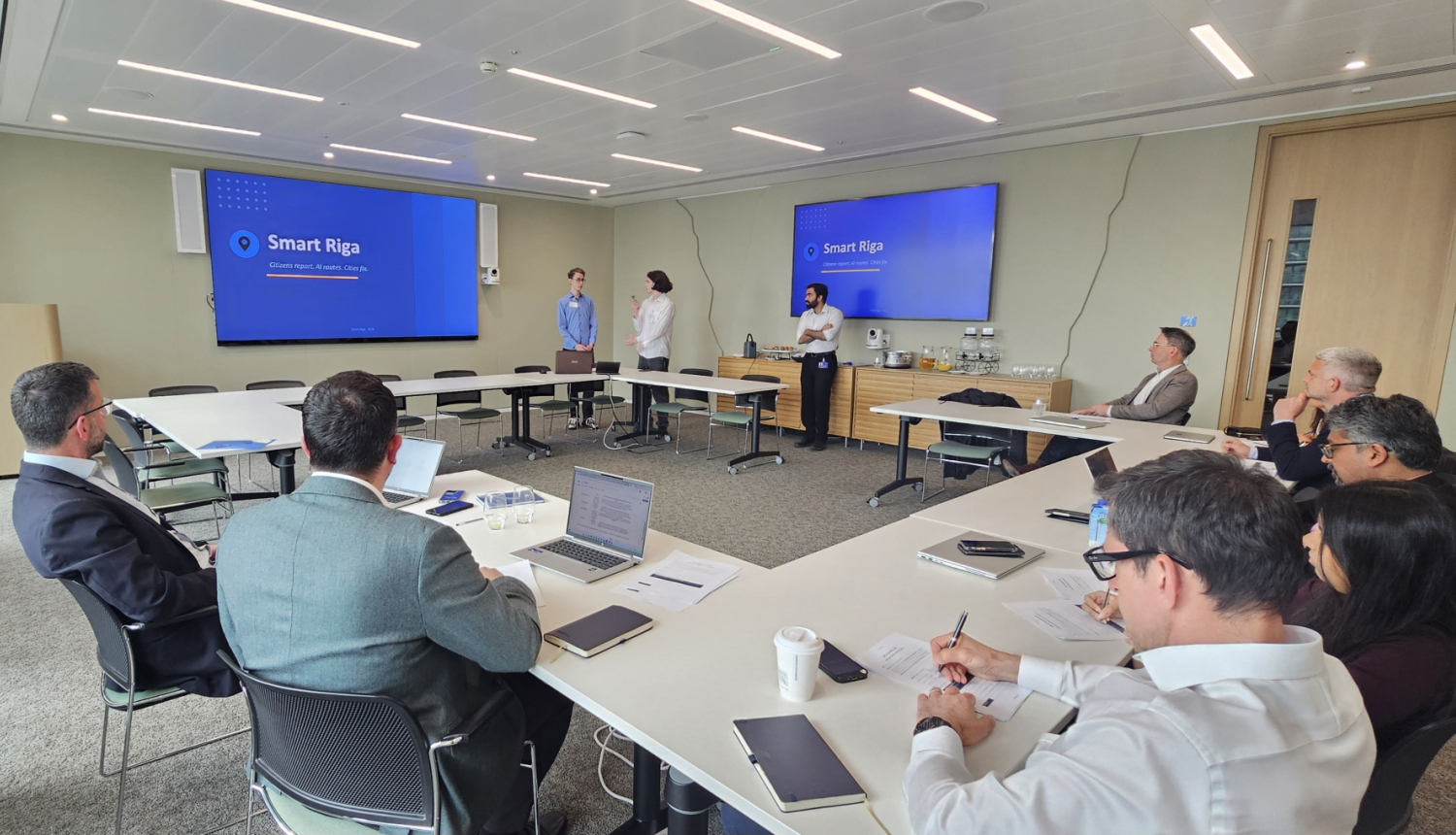
Last week, five teams of Riga secondary school students travelled to London to take part in a mentoring activity at the European Bank for Reconstruction and Development (EBRD) headquarters as part of the “Building New Apps Using MI and Vibe Coding Options” competition.
The competition initiative is implemented by the Riga City Council in collaboration with technology companies, providing young people with the opportunity to develop their digital and innovation skills in an international environment.
During the mentoring programme, students learnt the practical application of AI, worked in a hackathon format to develop their ideas, and received one-to-one support from experts from the EBRD’s Technology Department. At the end of the day, the young people presented their ideas to a panel of the Bank’s management and experts, receiving professional and encouraging feedback.
The presentation and evaluation part was particularly important for the participants, as it gave them a better understanding of how to successfully develop an idea from concept to a workable solution. This experience demonstrated that the ability to formulate a problem, work in a team, utilise technology, and present one’s vision convincingly is key to developing innovation.
“New people and new ideas can change the world – starting with your own community, country and city. Our mission is to empower young people with ideas and enthusiasm to develop them, opening up more opportunities and international experience. The mentoring activity at the EBRD has clearly demonstrated this,” says Laima Geikina, Chair of the Education, Culture and Sport Committee of Riga City Council.
“The mentoring part was the most memorable for me. We worked on projects and got direct feedback from high-level professionals with experience in MI and innovation. The presentation session and the recommendations we received gave us a much clearer direction on how to develop the idea further,” says Tomass Banga, an 11th-grade student at Riga State Gymnasium No 2 and one of the participants of the mentoring activity.
The mentoring visit in London provided essential support to the second-round participants of the competition, helping to make ideas more concrete, testable and feasible, while strengthening young people’s international vision.
During the visit, the students also visited the Embassy of the Republic of Latvia in the United Kingdom.
Information was prepared by Iveta Bulāne, Project Coordinator, External Communication Division of the Communication Department of the Riga City Council, e-mail: iveta.bulane@riga.lv.