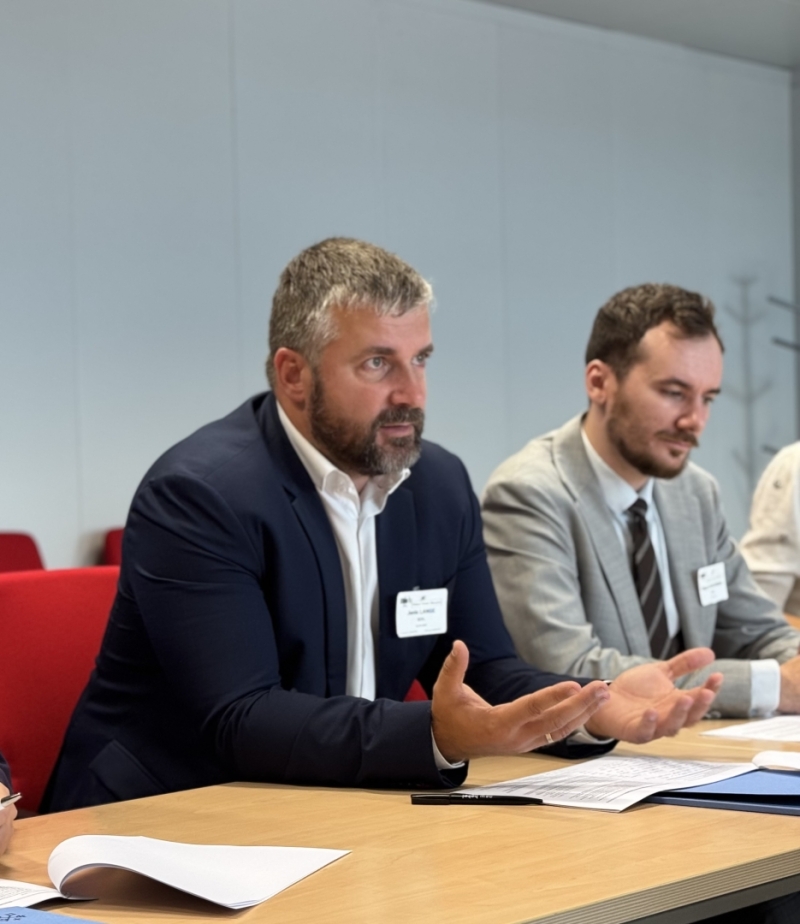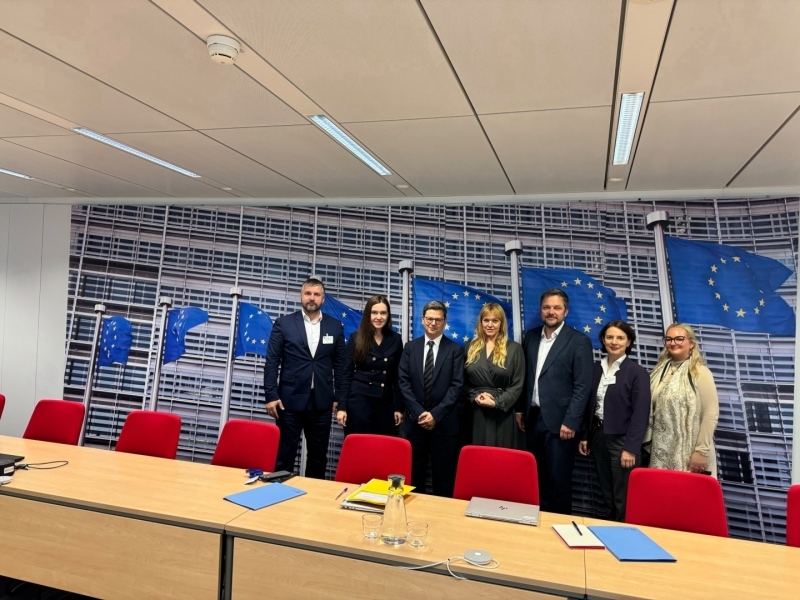


A delegation from Riga City Council, led by the city’s Executive Director, Jānis Lange, participated in the Connecting Europe Days 2026 conference in Brussels from 29 September to 1 October, which was dedicated to the development of the European transport network, and also met with representatives of the European Commission and Latvia’s Permanent Representation to the European Union. During the visit, Riga presented the city’s strategic transport priorities for 2028–2034, emphasising Riga’s role as a metropolis of European significance in ensuring transport links, facilitating the region’s security and resilience, and developing public transport.
Riga is Latvia’s main transport hub, where motorways and railways of European importance converge; it is home to the Port of Riga and Riga Airport, and a large proportion of Latvia’s population uses its infrastructure. The city’s strategic transport projects are therefore important not only for residents’ mobility in the Riga metropolitan area, but also for Latvia’s international connectivity and competitiveness.
“If we want Riga to be safer, more accessible, a better place to live and more attractive to businesses over the next ten years, we must start preparing the necessary decisions as early as today. We must be able to clearly demonstrate how each investment will change people’s daily lives, and work together with state institutions and European partners to bring these plans to fruition,” says Jānis Lange, Executive Director of Riga City Council.
Riga’s development directions include improving traffic flow on major routes, rebuilding bridges and overpasses, constructing grade-separated railway crossings, expanding the tram network, and modernising the city’s bus, tram and trolleybus fleets. At the same time, the city is working with the Ministries of Transport and Defence to prioritise the strengthening of transport links considered vital to national defence.
In discussions with the European Commission’s Directorate-General for Regional and Urban Policy (DG REGIO) and the office of Raffaele Fitto, the Commission’s Executive Vice-President for Cohesion and Reforms, Riga emphasised that cities must be involved in shaping the priorities of the next EU budget from the very outset, so that they are based on the needs of residents and businesses. Riga’s infrastructure and services are also used by residents of other local authorities; therefore, investment in the capital must be assessed in the context of the development of the metropolitan area and Latvia as a whole.
In talks with Latvia’s Permanent Representation to the EU, the delegation discussed how Riga and national institutions can work together more effectively throughout the planning process. Riga presented the needs of the city and its metropolitan area, stressing the importance of identifying priorities early, while Latvia is still shaping its position and investment priorities for the next EU budget period. The discussions also focused on preparing strategic projects, aligning them with national and European objectives, and exploring different funding sources, including opportunities to attract private investment.
The city will continue sharing information regularly with Latvia’s Permanent Representation to the EU and the relevant sectoral ministries to prepare in good time to secure EU funding for the period 2028–2034.
During a meeting with the office of Henna Virkkunen, Executive Vice-President of the Commission, Riga focused on using digital tools and AI to improve urban planning. By combining map, transport, energy and environmental data, the city can identify more accurately the areas where investment is most needed. Riga has already successfully implemented various pilot projects and wishes to continue rolling out the solutions developed on a wider scale, creating services that the city can use in the long term.
Following its visit to Brussels, Riga will continue developing investment projects in transport and other sectors, in collaboration with national and EU institutions, research organisations and private partners. The aim is to agree on a clear development path, from identifying needs to making investments that improve people’s quality of life, the city’s competitiveness and its resilience in times of crisis.
Information was prepared by Mārtiņš Vilemsons, Project Coordinator at External Communication Division of Riga City Council Communication Department, email: martins.vilemsons@riga.lv.