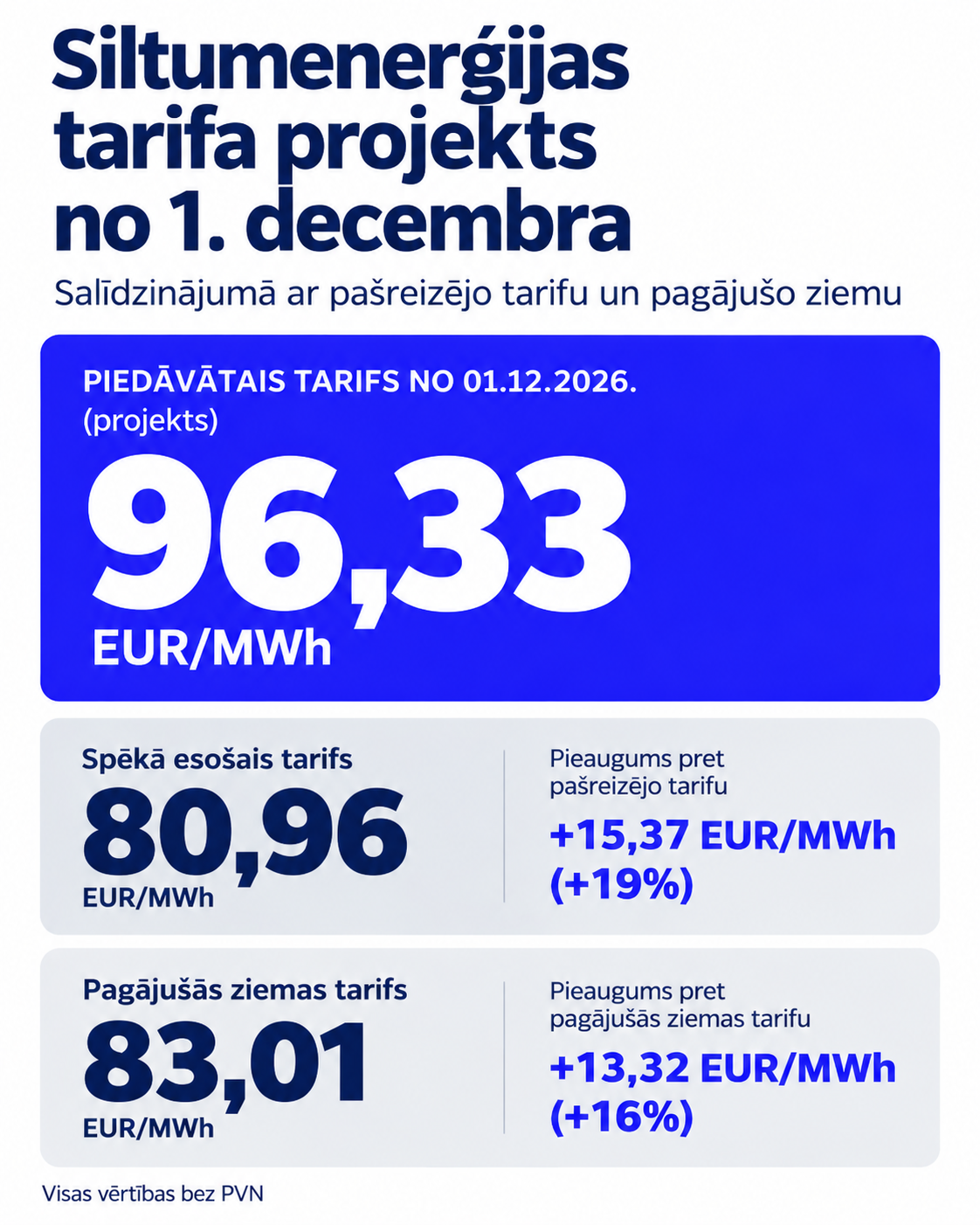


JSC “Rīgas siltums” has submitted a draft proposal to amend the heat energy tariff to the Public Utilities Commission. This means that, starting 1 December 2026, the heat energy tariff will be set at 96.33 EUR/MWh excluding VAT – 16 per cent higher than the tariff applied during the previous heating season and 19 per cent higher than the currently applicable tariff. Consequently, the increase in Riga’s heat energy tariff will be lower than previously forecast.
“Our priority has always been to ensure that Riga residents pay as little as possible for heating, as we understand how significantly heating bills affect every family’s budget. Even though energy prices continue to rise and heating costs in several Latvian municipalities are already higher than in Riga, we continue to look for ways to reduce costs. Through joint efforts, we have ensured that the anticipated tariff increase will be lower than previously forecast,” emphasises Viesturs Kleinbergs, Chairman of the Riga City Council.
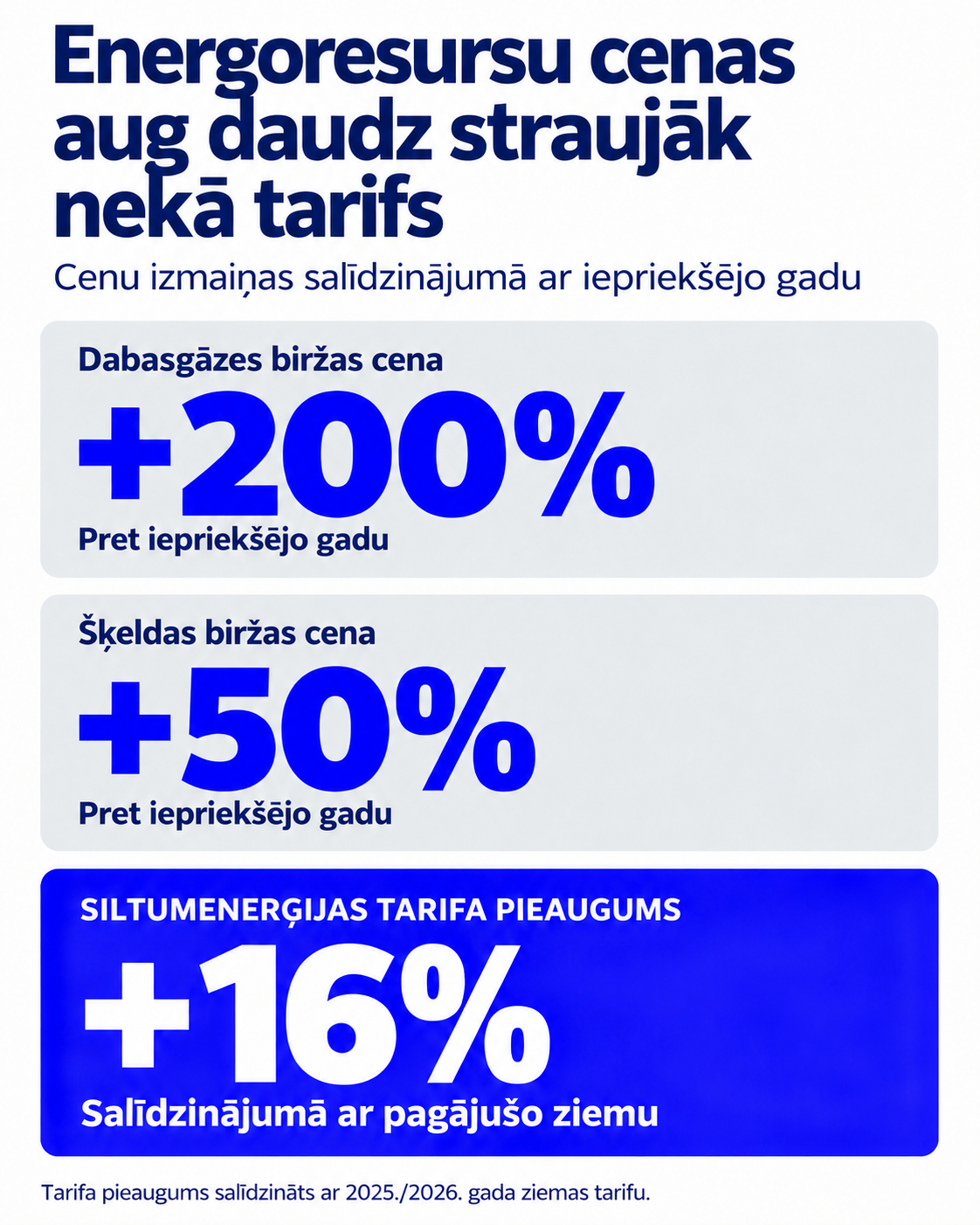
Kalvis Kalniņš, Chairman of the Board of JSC “Rīgas siltums”: “The increase in energy commodity prices is significant, and it is not possible to completely offset its impact on heating tariffs. Compared to last year, the price of natural gas has already risen by 200 per cent, the cost of biomass has grown roughly by 50 per cent, and electricity prices have risen as well. These resources account for approximately 70 per cent of the costs underlying the heat energy tariff. Given this increase in costs, we had previously forecast that the heat energy tariff in Riga could increase by 20-30 per cent starting in December. However, thanks to the concerted efforts of all parties involved and the measures taken, we have managed to limit the tariff increase to 16 per cent compared to the previous heating season. We understand that Riga residents are also feeling the effects of this increase, which is why we have done everything possible to ensure that it is significantly lower than previously forecast.”
Changes in the tariff are directly driven by energy prices, particularly natural gas price trends, which remain volatile and on an upward trajectory. Over the past six months, heightened geopolitical tensions in the Middle East have driven up natural gas prices significantly, putting additional pressure on the costs of heat energy production.
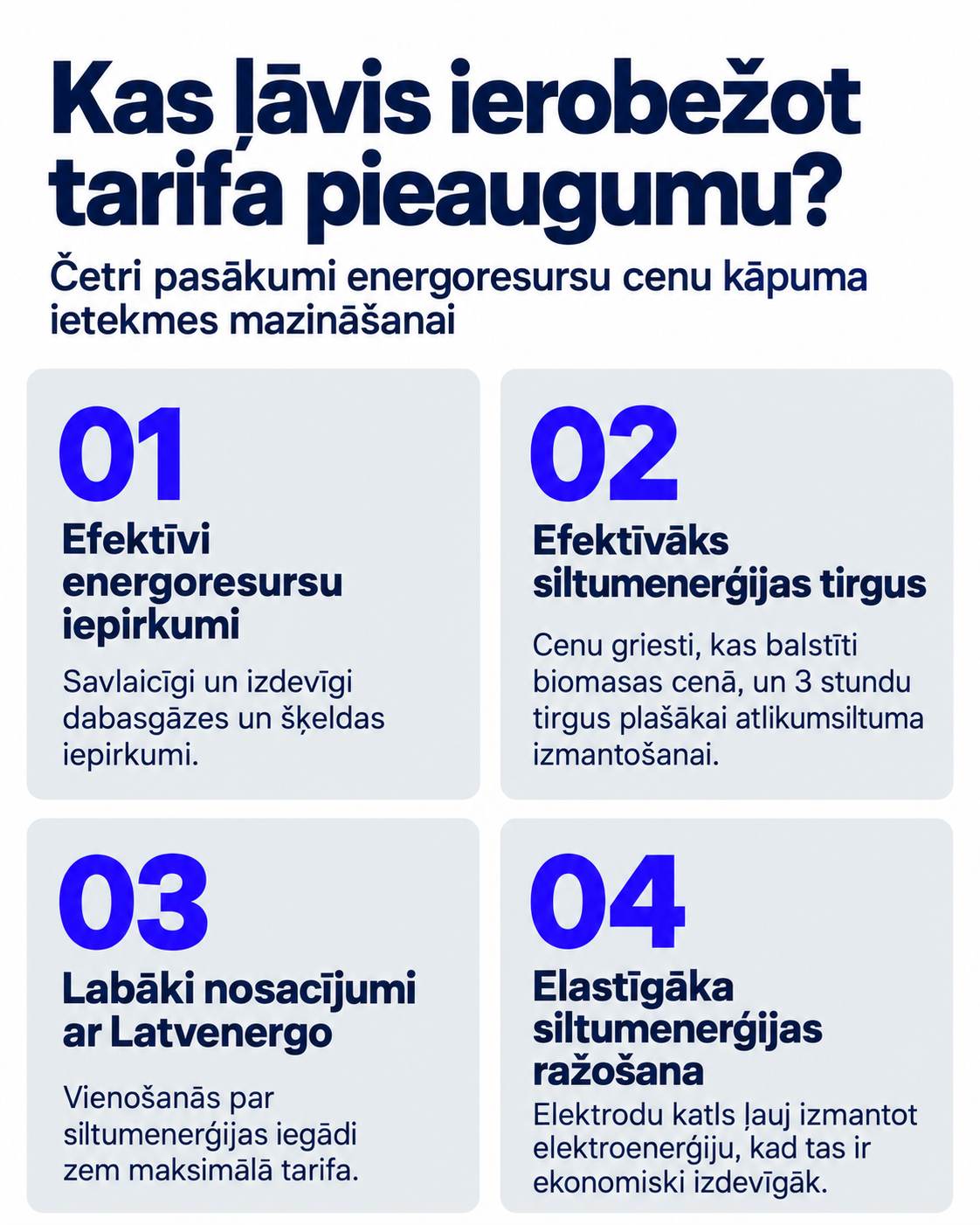
As was the case before the previous heating season, JSC “Rīgas siltums” has implemented a series of measures this year to minimise the impact of fluctuations in energy prices on the tariff. In line with our fuel procurement strategy, we procured natural gas gradually and in a timely manner, thereby diversifying risks and mitigating the potential impact of events in the Middle East on Riga’s district heating costs.
Following an initiative by JSC “Rīgas siltums”, in collaboration with the Ministry of Climate and Energy, a solution has been developed to decouple the price of biofuel-generated heat energy in the market zone from fluctuations in the price of natural gas, by setting a price ceiling on heat procurement. The price cap for heat energy has been established in accordance with the amendments to the Energy Law.
A three-hour heat procurement mechanism has been introduced, enabling cogeneration plants to utilise the generated heat more efficiently during periods of favourable electricity market conditions, thereby promoting the development of a more flexible heat energy market to increase competition and reduce costs for consumers.
In preparation for the new heating season, natural gas has been procured and an agreement has been reached with JSC “Latvenergo” regarding the procurement of heat energy.
These measures, implemented in collaboration with our partners, helped to mitigate the impact of rising costs and ensure that the tariff increase was lower than initially forecast.
JSC “Rīgas siltums” cannot influence the global price of natural gas, but it can reduce its impact on the city’s heat energy tariff.
Kalvis Kalniņš, Chairman of the Board of JSC “Rīgas siltums”: “The strategic direction of JSC ‘Rīgas siltums’ is to gradually reduce its dependence on natural gas, the price of which has a significant impact on heat energy tariffs. Currently, natural gas accounts for around 60 per cent of the energy resources used, and our goal is to reduce this share to 35 per cent within five years. At the same time, natural gas remains essential to ensure the generation of heat energy during periods of peak demand and in crisis situations. We are therefore continuing to develop renewable energy capacities, expand the use of waste heat, increase the flexibility of production and modernise our infrastructure. The aim of these measures is to build a more secure Riga district heating system that is more resilient to fluctuations in energy prices, while gradually reducing the impact of external factors on the tariff.”
Further natural gas purchases will be required during the heating season. The volumes purchased will depend on the severity of the winter, while the price will depend on conditions in the energy market. Consequently, while the need for an in-season tariff revision cannot be entirely ruled out at this stage, it would be premature to speculate on any possible adjustments. Any such decision will be based on economically justified calculations, and the public will be informed in good time.